
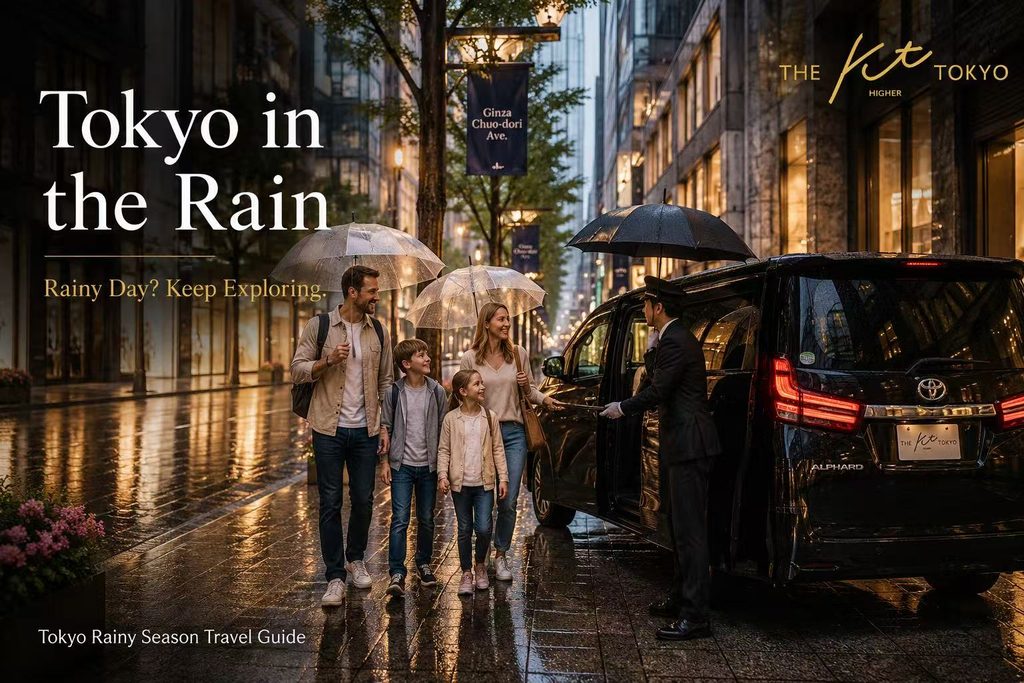
Planning a trip to Tokyo during the rainy season?
Many international travelers worry about the same thing before visiting Japan:
“Will the rain ruin my Tokyo trip?”
Fortunately, the answer is usually no.
Tokyo is one of the easiest major cities in Japan to enjoy even when the weather is not perfect. Shopping districts, observation decks, museums, department stores, restaurants, cafés, entertainment complexes and large stations provide plenty of options for rainy days.
The key is not trying to follow exactly the same itinerary regardless of the weather.
Instead, a little flexibility can turn a rainy day into a surprisingly enjoyable day in Tokyo.

When Is the Rainy Season in Tokyo?
Japan’s rainy season is known as tsuyu (梅雨).
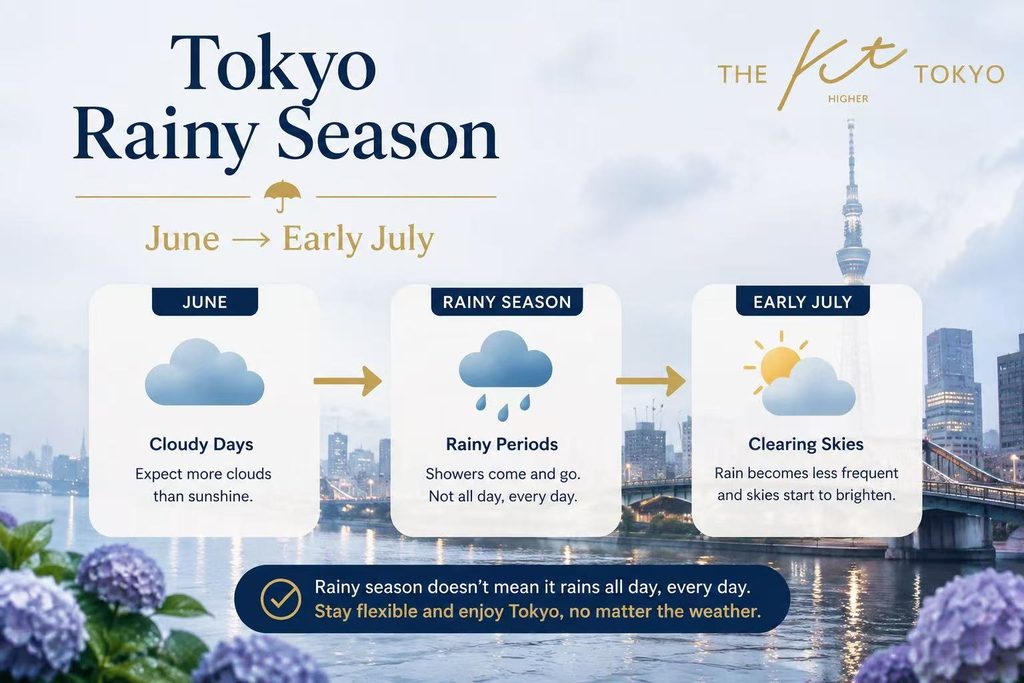
In Tokyo, it generally occurs around June through the first half of July, although the exact timing and weather conditions vary from year to year.
One important thing for overseas visitors to understand is that “rainy season” does not necessarily mean continuous heavy rain every day.
You may experience cloudy mornings, short periods of rain, changing conditions throughout the day, or completely dry periods between showers.
That means a trip during this season does not automatically need to become an indoor-only vacation.
Instead, check the forecast regularly and build some flexibility into your schedule.
Does It Rain All Day During Tokyo’s Rainy Season?
Not necessarily.
This is one of the biggest misunderstandings travelers can have when planning a June or early-July trip to Tokyo.
Some days can certainly be wet, but weather conditions often change during the day.
For example:
Morning: Rain
Lunch: Ginza
Afternoon: Rain stops
Late afternoon: Asakusa
Evening: Tokyo Skytree or Tokyo Tower
A flexible itinerary can make a major difference.
Rather than cancelling an entire day because rain appears in the forecast, it can be better to decide which activities should be saved for clearer periods and which can comfortably be enjoyed while it rains.
Tokyo Is Surprisingly Easy to Explore on a Rainy Day
Tokyo has a major advantage over destinations where most sightseeing takes place outdoors.
A large part of the Tokyo experience can be enjoyed indoors or with relatively short outdoor walking distances.
Areas such as Ginza, Shibuya, Shinjuku and Odaiba offer combinations of shopping, dining, entertainment and indoor attractions.
Major observation destinations such as Tokyo Skytree and Tokyo Tower can also be incorporated into a rainy-day itinerary, although visibility from observation decks naturally depends on the weather.
This gives travelers plenty of alternatives when outdoor sightseeing becomes uncomfortable.
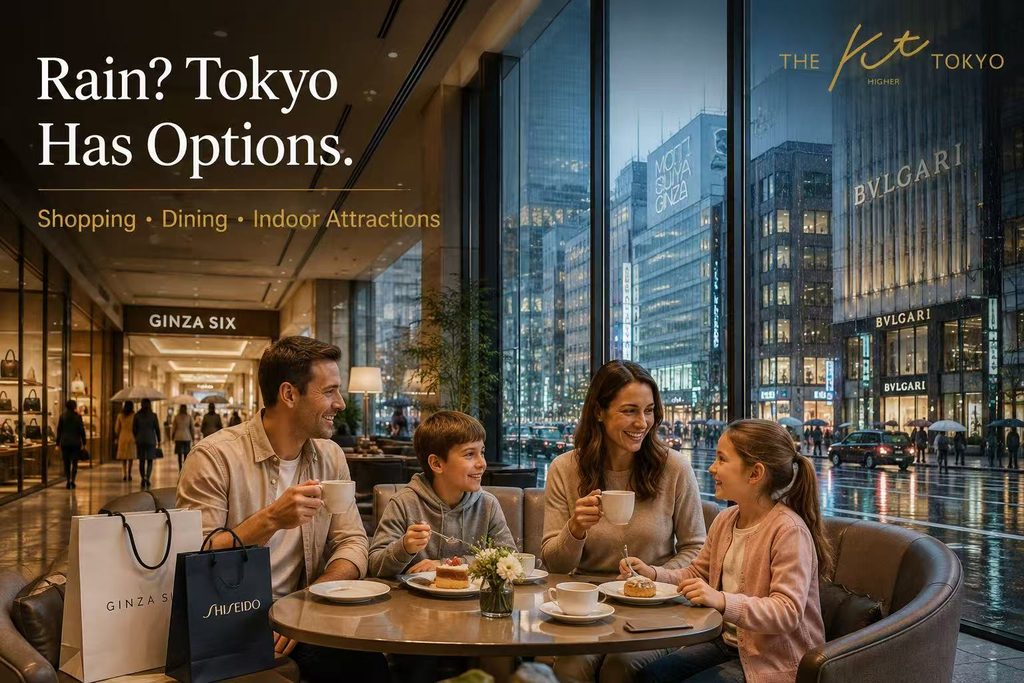
Best Things to Do in Tokyo When It Rains
If the forecast shows rain for most of the day, there is no reason to spend hours walking outside under an umbrella.
Instead, consider building the day around food, shopping and indoor attractions.
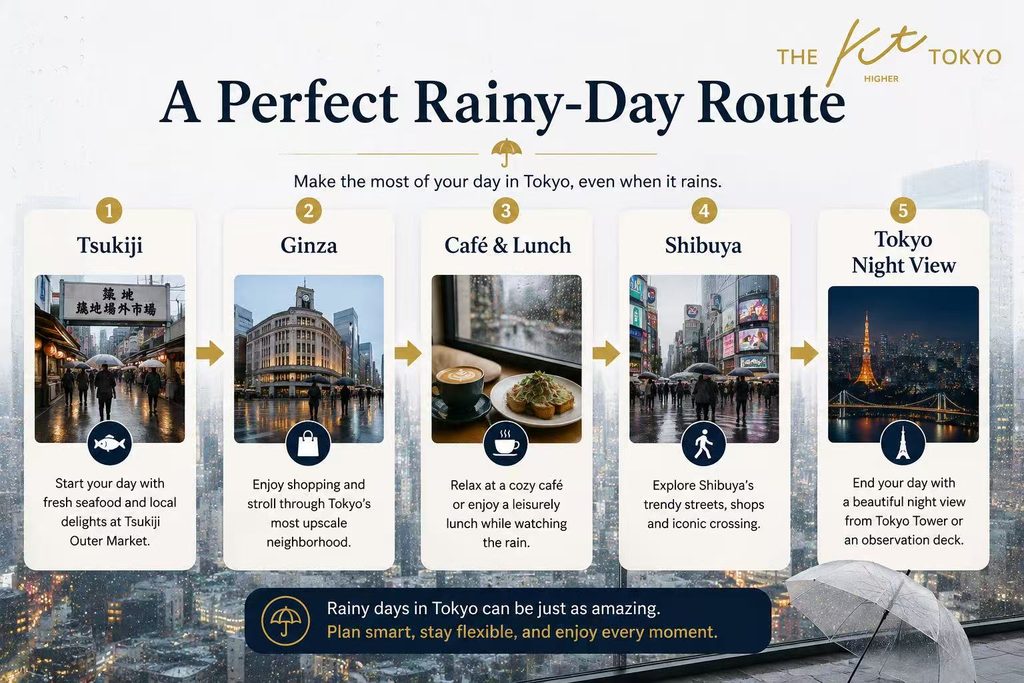
One practical rainy-day route could be:
Tsukiji Outer Market
↓
Ginza
↓
Lunch & Café
↓
Shibuya
↓
Tokyo Night View
This itinerary allows you to experience several different sides of Tokyo without making outdoor sightseeing the main focus of the day.
And if the weather improves unexpectedly, you can simply add an outdoor destination.
Ginza — One of the Easiest Areas for a Rainy Tokyo Day
Ginza is particularly convenient when the weather is unpredictable.
Department stores, luxury boutiques, restaurants and cafés are concentrated within a relatively compact area.
You can spend time shopping, enjoy lunch, take a café break and wait for the weather to improve without feeling as though your sightseeing day has been wasted.
For travelers who enjoy shopping and dining, a rainy afternoon in Ginza can actually be quite relaxing.
Shibuya and Shinjuku — Shopping, Dining and Entertainment
Shibuya and Shinjuku are also useful destinations to keep in mind when rain becomes heavier.
Both areas provide extensive shopping and dining options, while major stations connect directly or conveniently to many commercial facilities.
Instead of crossing Tokyo repeatedly in bad weather, you can spend several hours within one district and move again when conditions improve.
This strategy is especially useful for families traveling with children or older family members.

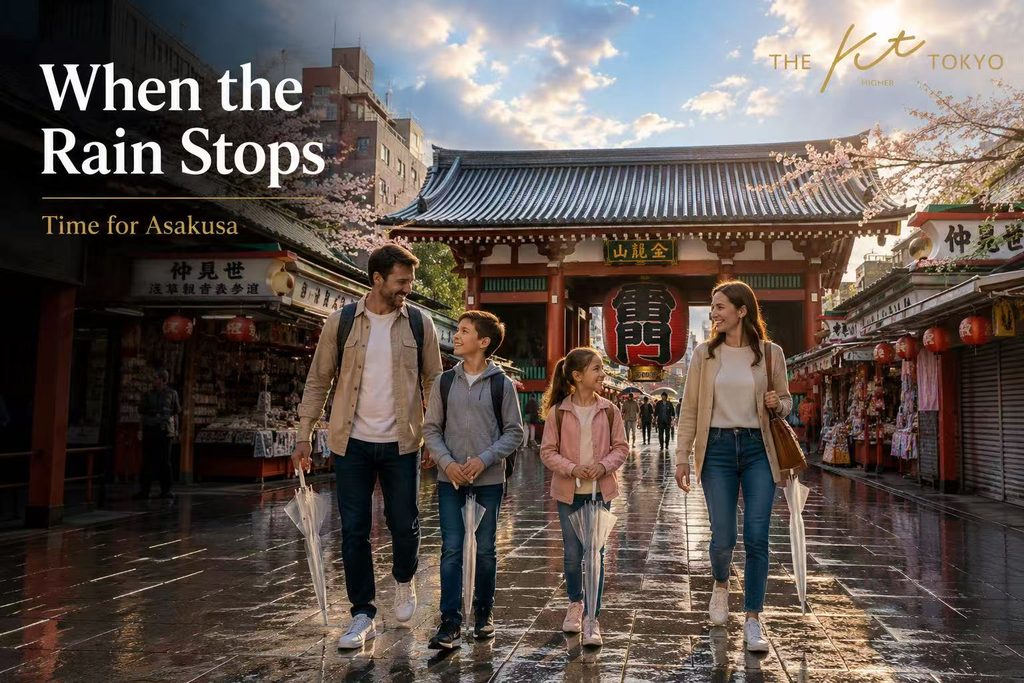
Save Asakusa and Other Outdoor Spots for a Break in the Rain
Some of Tokyo’s classic attractions are more enjoyable when the rain becomes lighter.
Senso-ji in Asakusa, parks and outdoor walking areas are good examples.
If rain is expected in the morning but conditions improve in the afternoon, start with shopping, lunch or an indoor attraction.
Then visit Asakusa once the weather becomes more comfortable.
A simple itinerary could look like this:
Morning rain → Ginza → Lunch → Rain clears → Asakusa → Skytree → Tokyo Tower at night
This is often much more enjoyable than forcing yourself to complete outdoor sightseeing during the heaviest rain.
What About Mt. Fuji, Hakone or Kamakura on a Rainy Day?
Day trips outside Tokyo require a little more consideration.
For Mt. Fuji, weather matters considerably because visibility is an important part of the experience. Rain, clouds and fog can make it difficult or impossible to see the mountain.
Hakone can still offer hot springs, museums and other experiences, but mountain scenery may also be affected by poor weather.
Kamakura and Enoshima include more outdoor walking, so persistent heavy rain can make the day less comfortable.
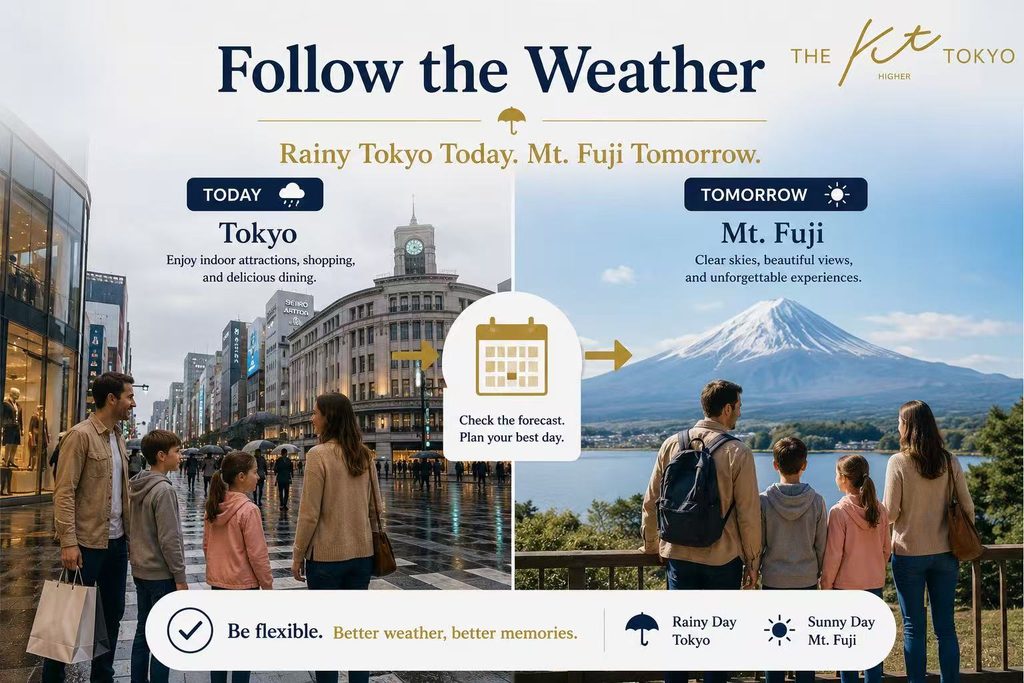
If you have several days in Tokyo, it may therefore be worth keeping your schedule flexible.
Use the wetter day for Tokyo and choose the better-weather day for Mt. Fuji, Hakone or Kamakura whenever your reservations and overall itinerary allow.
Why Flexible Transportation Can Help on Rainy Days
Rain changes the way a city feels when you are carrying shopping bags, traveling with children, helping older family members or moving between several attractions.
Walking ten minutes between a station and an attraction may feel completely different in heavy rain.
This is one reason some families and small groups choose a private vehicle for their Tokyo sightseeing day.
A vehicle can pick you up directly from your hotel and move between destinations without requiring repeated station transfers.
It also makes it easier to adjust the order of the itinerary.
If it is raining in the morning, you might visit an indoor destination first.
If conditions improve later, the schedule can shift toward Asakusa or another outdoor location.
The important advantage is not simply avoiding the rain—it is having more flexibility in how the day is organized.

A Sample Flexible Rainy-Day Tokyo Itinerary
Here is one example for travelers who want to enjoy Tokyo without allowing the weather to control the entire day:
Hotel Pickup
↓
Tsukiji Outer Market
↓
Ginza Shopping & Lunch
↓
Asakusa / Senso-ji (when the rain becomes lighter)
↓
Tokyo Skytree
↓
Shibuya or Tokyo Tower
↓
Hotel
The exact order does not have to remain fixed.
That is the point.
On a rainy day, the best itinerary is often the one that can change.

Is Tokyo Worth Visiting During the Rainy Season?
Absolutely.
Rainy season should be considered something to plan around, rather than a reason to avoid Tokyo entirely.
Tokyo offers an enormous variety of indoor experiences, restaurants, shopping districts and attractions. When the weather improves, outdoor sightseeing can be added back into the schedule.
Bring a compact umbrella, wear comfortable shoes that can handle wet streets, check the latest forecast and avoid making every hour of your itinerary inflexible.
Most importantly, don’t let a rain icon in the forecast convince you that the entire trip will be ruined.
Tokyo can be beautiful in the rain too.
Enjoy Tokyo, Whatever the Weather
A great Tokyo itinerary does not always require perfect blue skies.
Sometimes the best approach is simply:
Rain → enjoy Tokyo indoors.
Rain stops → explore outdoors.
Weather changes → change the plan.
For families, small groups and travelers who prefer convenient door-to-door transportation, KT Hire private transportation can also help make rainy-day sightseeing more comfortable and flexible.
From your hotel to Ginza, Asakusa, Shibuya, Tokyo Skytree and other destinations, your itinerary can be planned around the places you want to visit and adjusted according to the day’s conditions.
Planning a Tokyo trip and worried about the weather?
Contact KT Hire via WhatsApp with your travel date, hotel, number of passengers and places you would like to visit.
We will be happy to help you plan a comfortable private transportation itinerary in Tokyo — rain or shine.
FAQ
Q1. Is Tokyo worth visiting during the rainy season?
Yes. Tokyo is still a great destination during the rainy season. Many popular areas offer shopping, dining, observation decks and indoor attractions, so rain does not necessarily mean losing an entire sightseeing day. The key is keeping your itinerary flexible and checking the latest weather forecast.
Q2. When is the rainy season in Tokyo?
Tokyo’s rainy season, known as tsuyu (梅雨), generally occurs around June through the first half of July. However, the exact beginning and end vary from year to year, and rainy season does not mean that it rains continuously every day.
Q3. What are the best places to visit in Tokyo on a rainy day?
Ginza, Shibuya, Shinjuku and Odaiba are convenient options because they offer plenty of shopping, restaurants and indoor entertainment. Tokyo Skytree and Tokyo Tower can also be considered, although observation-deck visibility depends on weather conditions.
Q4. Should I cancel a Mt. Fuji day trip if rain is forecast?
Not automatically, but Mt. Fuji visibility is strongly affected by clouds, rain and fog. If your itinerary is flexible, it may be better to use the wetter day for sightseeing in Tokyo and visit Mt. Fuji on the day with the better forecast. Always check current conditions close to your travel date.
Q5. Is a private car useful for sightseeing in Tokyo when it rains?
It can be particularly convenient for families, groups with children, older travelers or anyone planning several stops in one day. Door-to-door transportation reduces repeated walking between stations and attractions, and a flexible itinerary can make it easier to adjust destinations according to changing weather.
Related Articles|関連記事
A. 2026년 7월 8일
Tokyo Night Drive Guide: Best Views of Tokyo Tower, Rainbow Bridge & Shibuya Sky
Best Tokyo Night Views: Tokyo Tower, Shibuya Sky & Odaiba | KT株式会社
B. 2026년 7월 1일
Best Day Trips from Tokyo: Mt. Fuji, Hakone, Kamakura, Nikko and Karuizawa
Best Day Trips from Tokyo: Top 5 Places to Visit | KT株式会社
C. 2026년 8월 5일
Mt. Fuji Bus Tour vs Private Car: Which Option Is Best for Families, Couples, and First-Time Visitors?
Mt. Fuji Bus Tour vs Private Car | Which Is Best for Families and | KT株式会社