

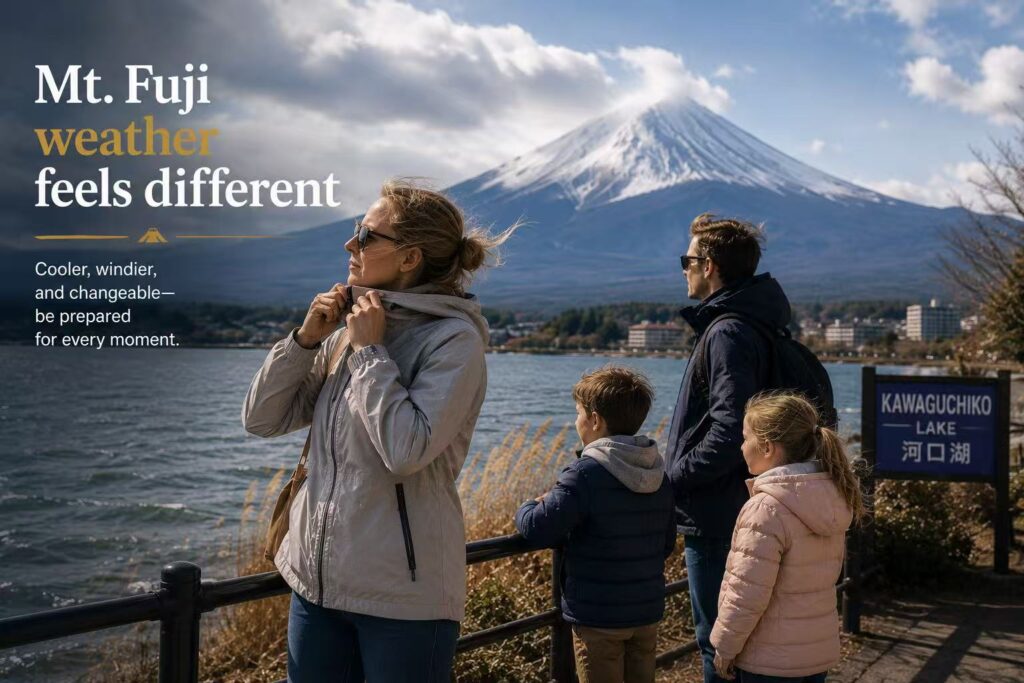
The weather around Mt. Fuji can feel very different from central Tokyo, especially in Kawaguchiko, Yamanakako and Oshino Hakkai. Even on a sunny day, cool winds, changing temperatures and unexpected rain can affect your sightseeing experience.
If you are planning a Mt. Fuji day trip, choosing the right clothes is just as important as planning your route. This guide explains what to wear in spring, summer, autumn and winter, along with practical packing tips for families and first-time visitors.
This guide focuses on sightseeing around the Fuji Five Lakes area rather than climbing to the summit of Mt. Fuji, where conditions are much more demanding.

Many travelers say:
“Tokyo felt warm, but Mt. Fuji feels much colder.”
This happens for several reasons.
First of all, Kawaguchiko and nearby Fuji areas are located at higher elevations.
In addition, lake areas and open sightseeing spots often feel windier.
Moreover, most Mt. Fuji tours include:
As a result, the temperature often feels lower than expected.
Therefore, checking only the daily high temperature is usually not enough.
The best strategy is:
layered clothing.
This is because Mt. Fuji weather changes throughout the day.
For example:
Therefore, multiple light layers work much better than one heavy jacket.
Good examples include:
This allows travelers to adjust comfortably during the trip.
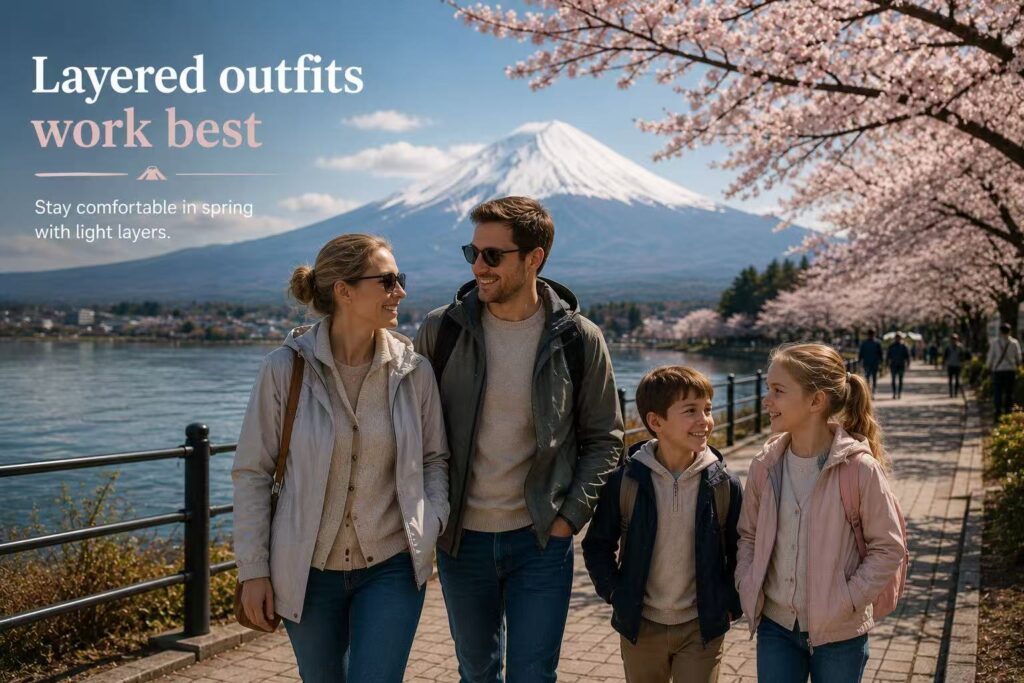
Spring is one of the most popular Mt. Fuji travel seasons.
Cherry blossoms and clear skies attract many family travelers.
However, spring around Mt. Fuji can still feel chilly.
Especially during:
temperatures often feel much colder than Tokyo.
Therefore, spring travelers should always prepare slightly warmer clothing than expected.
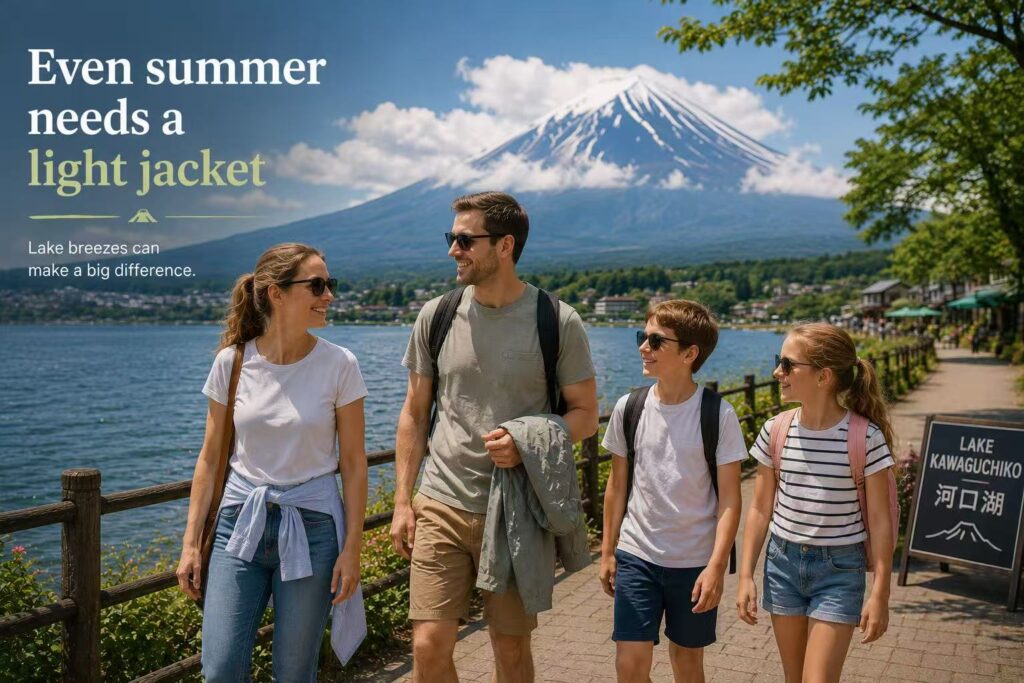
Summer around Mt. Fuji often feels less humid than Tokyo.
However, weather changes quickly.
In particular, rainy season conditions may create:
Even during summer, carrying a light jacket is highly recommended.
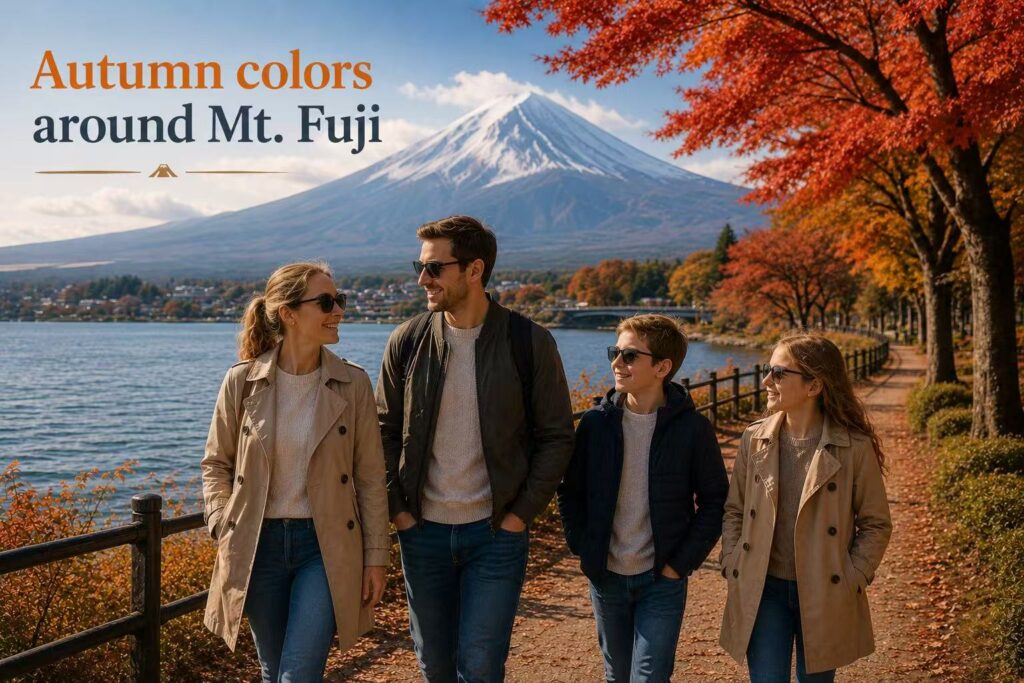
Autumn is personally one of the best seasons for Mt. Fuji scenery.
The skies are often clear, and autumn colors create beautiful landscapes.
However, temperatures can change quickly between morning and evening.
Recommended Autumn Clothing
slightly warmer preparation is usually better.
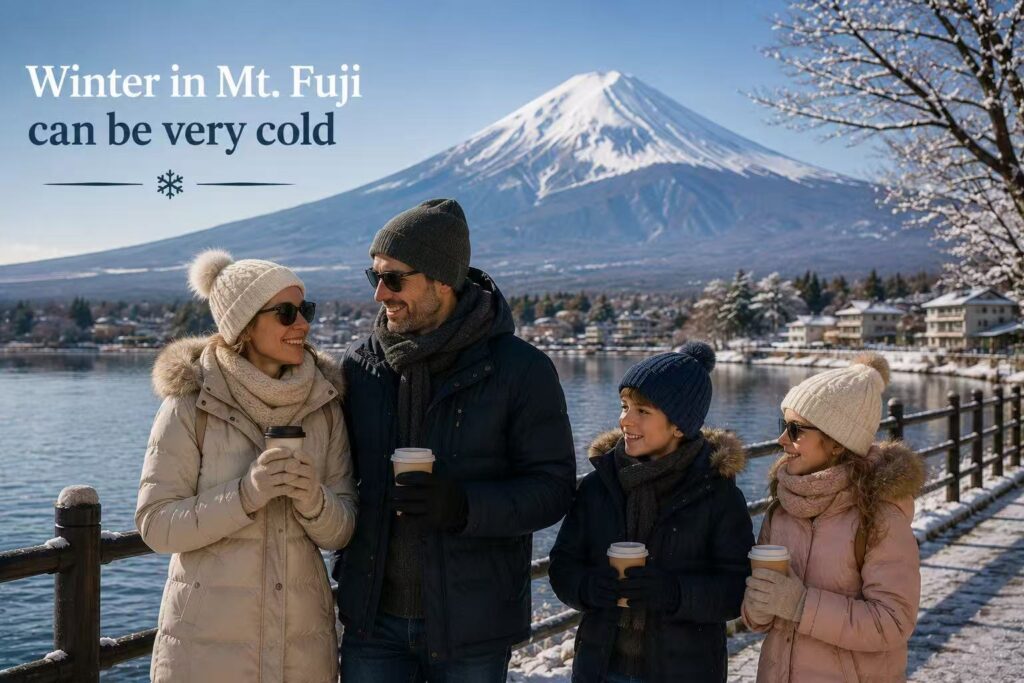
| Season | Recommended Clothing | Essential Items |
|---|---|---|
| Spring (Mar–May) | Long sleeves, sweaters, windbreaker | Light jacket, comfortable shoes |
| Summer (Jun–Aug) | Breathable clothes, light outer layer | Hat, umbrella, rain jacket |
| Autumn (Sep–Nov) | Long sleeves, knitwear, warm jacket | Scarf, comfortable shoes |
| Winter (Dec–Feb) | Warm coat, thermal layers, insulated footwear | Gloves, scarf, warm socks |
Therefore, winter travelers should prepare carefully for outdoor conditions.

Children often feel weather changes more strongly than adults.
Therefore, family travelers should prepare:
In addition, outdoor photo stops may increase exposure to wind and cold temperatures.
Because of this, flexible clothing becomes very important.
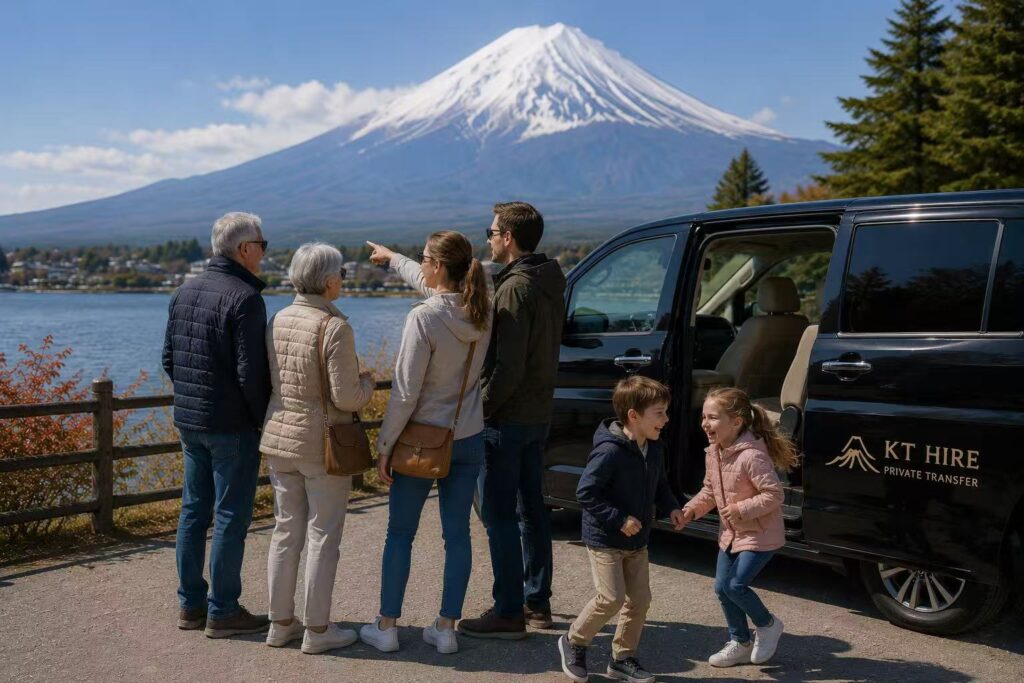
Weather and transportation are closely connected during Mt. Fuji travel.
can make train transfers feel tiring.
comfortable transportation often improves the entire experience.

Essential Mt. Fuji Packing Checklist
Preparation before the trip often creates a much smoother experience.

Final Thoughts
Mt. Fuji trips are beautiful during every season.
However, weather conditions can change quickly.
Therefore, preparing the right clothing and packing items is extremely important.
comfortable preparation often changes the entire trip quality.
We hope this guide helps travelers enjoy a smoother and more comfortable Mt. Fuji journey.

Q1. Is Mt. Fuji colder than Tokyo?
Yes. The Mt. Fuji and Kawaguchiko area is generally cooler than central Tokyo, especially in the morning, evening and during colder seasons. Travelers should check the local forecast rather than relying only on Tokyo weather.
Q2. What should I wear to Mt. Fuji in spring?
Layered clothing is recommended. A light jacket or warmer outer layer can be useful because temperatures around Kawaguchiko may feel noticeably cooler than Tokyo.
Q3. What should I wear around Mt. Fuji in summer?
Light and comfortable clothing is suitable during warm weather, but bringing a thin jacket or extra layer is still useful, particularly for cooler mornings, evenings or higher-elevation areas.
Q4. What should I wear to Mt. Fuji in autumn and winter?
Autumn travelers should prepare layers and a warm jacket. In winter, a warm coat, gloves and suitable footwear are recommended, especially when temperatures drop or roads and walking areas become icy.
Q5. What should I pack for a Mt. Fuji day trip from Tokyo?
Useful items include comfortable shoes, layered clothing, a light rain jacket or umbrella, water, sunscreen and a portable charger. Check the Mt. Fuji-area weather forecast before leaving Tokyo.
A. 2026年5月22日
Best Private Mt. Fuji Day Tour From Tokyo for Families
Private Mt. Fuji Day Tour From Tokyo for Families | KT Hire | KT株式会社
B. 2026年6月1日
How to Get From Haneda Airport to Mt. Fuji (Bus vs Train vs Private Transfer)
Haneda Airport to Mt. Fuji: Bus vs Train vs Private Transfer | KT株式会社
C. 2026年6月3日
Best Way to Get From Narita Airport to Kawaguchiko (Travel Time, Cost & Comfortable Options)
Narita Airport to Kawaguchiko: Best Ways, Time & Cost | KT株式会社